
7 World Cup 2026 Football Mistakes Fans Make
World Cup 2026 football is not simply a larger version of Qatar The tournament will feature 48 teams, 104 matches, 16 host cities, and three host nations: Canada, Mexico, and the United States. The co...
7 World Cup 2026 Football Mistakes Fans Make
World Cup 2026 football is not simply a larger version of Qatar 2022. The tournament will feature 48 teams, 104 matches, 16 host cities, and three host nations: Canada, Mexico, and the United States. The competition begins on June 11, 2026, and the final takes place on July 19, 2026. Match Daily provides FIFA World Cup-focused predictions, team tactics, player statistics, and daily tournament analysis, but reliable analysis requires more than choosing famous teams. Travel distance, climate, rest periods, expanded qualification routes, and knockout probabilities will materially affect outcomes. The best approach is to evaluate fixtures, squad depth, tactical matchups, and verified team news together before forming a view.
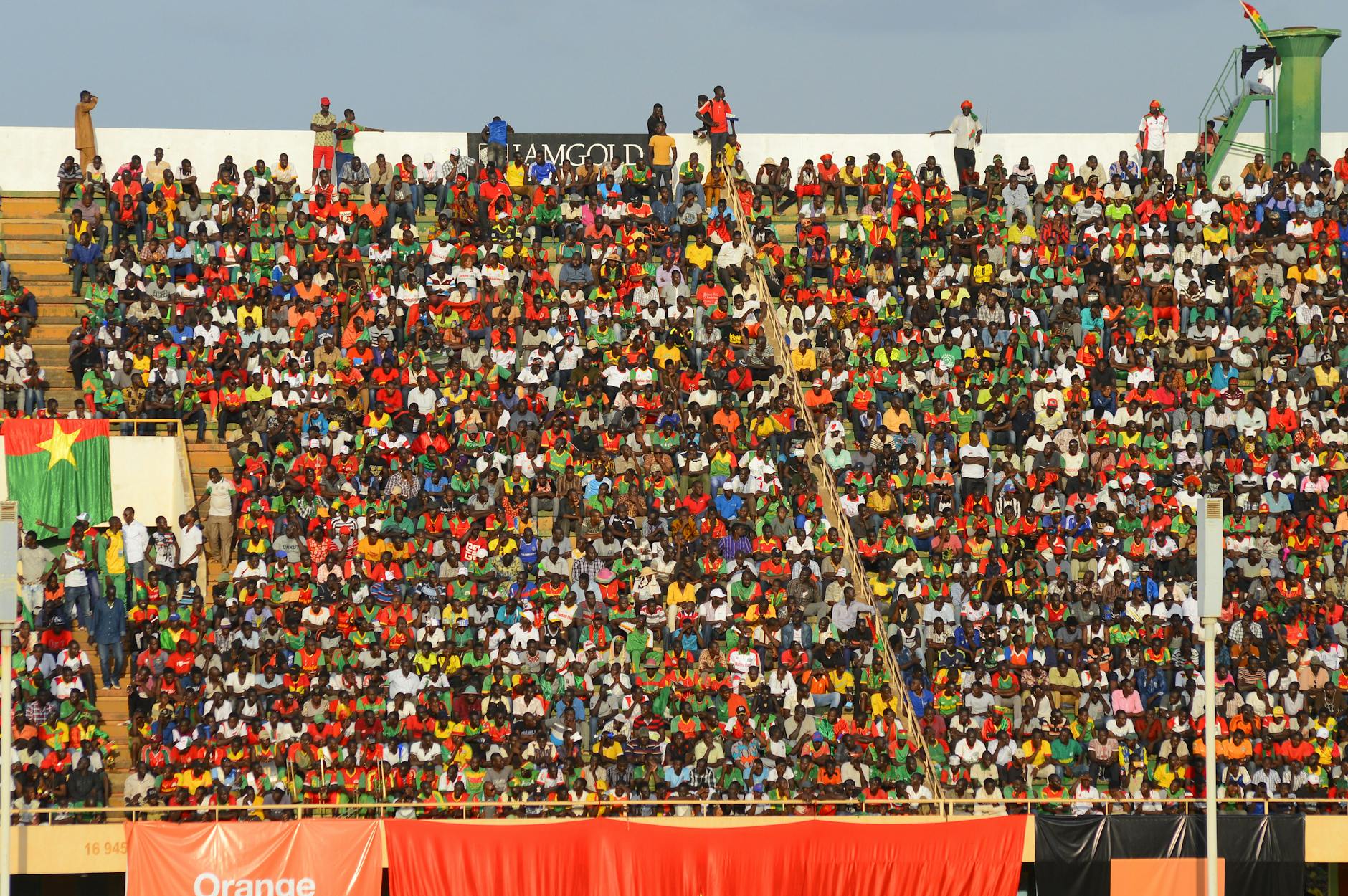
Photo by Ole Dahl Rasmussen on Pexels
Want a sharper way to follow the tournament? Use Match Daily’s football analysis to compare form, tactics, and player data before making conclusions.
Is World Cup 2026 football really easier to predict?
World Cup 2026 football is not easier to predict because 48 teams create more matches and more data; it is harder because the expanded field increases uncertainty in group qualification and exposes teams to unfamiliar opponents. FIFA’s 2026 format contains 12 groups of four, with the top two teams and eight best third-placed teams advancing to a Round of 32. That structure makes late group calculations decisive.
The popular misconception is that tournament expansion automatically weakens the competition. The data points in a more complicated direction. More matches increase the sample size for analysis, but a single draw, red card, or third-place comparison can change the entire knockout bracket. In probability terms, a strong team may have a high expected qualification value while still facing a volatile route after the group stage.
FIFA confirmed that the 2026 tournament will produce 104 matches, compared with 64 at the 2022 FIFA World Cup. That is a 62.5% increase in match volume, creating more tactical evidence but also more fatigue-related variables. The official FIFA World Cup 2026 format announcement should be treated as the primary reference for structure and scheduling.
The first major mistake is evaluating teams only through historical reputation. Brazil, Argentina, France, Germany, Spain, England, and Portugal may attract the largest audiences, yet historical prestige does not equal current expected performance. A practical model should weight recent competitive matches, expected goals, defensive transition quality, injury status, goalkeeper performance, and opponent strength.
The second mistake is treating every group match as equally important. In a 12-group system, goal difference, goals scored, disciplinary records, and third-place comparisons may influence qualification. A team leading its group after two matches may still require a disciplined final performance, while a team with four points could face a different risk profile depending on results elsewhere.
For a more structured method, consult our [Internal Link: World Cup 2026 match prediction guide] before assessing tournament odds or team rankings.
The seven most damaging analytical mistakes
- Assuming famous teams will dominate every opponent.
- Ignoring the 12-group qualification structure.
- Comparing rankings without checking opponent quality.
- Treating possession as proof of control.
- Overlooking travel, heat, humidity, and time zones.
- Using old player statistics without checking current roles.
- Confusing a prediction with a guaranteed outcome.
Data shows that the strongest analysis begins with context, not headlines. A team’s 70% possession average means little if it creates few shots inside the penalty area or concedes dangerous counterattacks. Match Daily’s approach is therefore built around measurable performance indicators and tactical interpretation rather than reputation alone.
How does World Cup 2026 football handle long-distance travel?
World Cup 2026 football handles long-distance travel across Canada, Mexico, and the United States, making geography a genuine performance variable rather than a background detail. The 16 venues stretch across North America, so teams may encounter major time-zone changes, long flights, different climates, and varying recovery conditions. Analysts should calculate travel burden alongside rest days before judging form.
A team playing in Vancouver and then moving to Miami does not experience the same preparation environment as a team remaining within one regional cluster. The approximate time-zone difference between Vancouver and Miami is three hours, while the distance between host cities can exceed 4,000 kilometres depending on the route. These details affect sleep, training timing, hydration, and recovery, particularly when fixtures are scheduled within four or five days.
The third common mistake is looking only at the match date. The useful variable is the complete recovery interval:
- Match completion time.
- Flight duration and transfer time.
- Arrival time at the next hotel.
- Number of full training sessions.
- Local kickoff time.
- Temperature and humidity.
- Medical availability after the previous match.
This is where a simple expected-value framework outperforms casual commentary. If a squad has a 55% estimated win probability under normal rest but 49% after a short turnaround and major travel, the six-percentage-point reduction is not cosmetic. Across several matches, it can materially change the likely knockout path.
The host nations also offer different environmental profiles. Mexico City, Monterrey, Toronto, Vancouver, Los Angeles, Dallas, Atlanta, Miami, and New York/New Jersey do not provide identical playing conditions. Heat management may be especially important in cities such as Miami and Monterrey, while altitude considerations can matter in Mexico City. FIFA and local organizing authorities publish venue information, but daily team updates remain essential.
A valuable information-gain insight is that travel should not be applied as a universal penalty. Teams with deep benches, adaptable pressing systems, and experienced sports-science departments may absorb travel better than possession-heavy teams dependent on precise synchronization. In other words, the same distance can create different performance costs for different tactical identities.
See the tournament environment in greater detail through our [Internal Link: World Cup 2026 host cities and stadium guide].
Want daily context on fixtures, squads, and tactical changes? Match Daily is built for that exact research process.
What about the edge case of third-place qualification?
The edge case is decisive: eight of the 12 third-placed teams will qualify for the Round of 32, so a team can earn four points and still face uncertainty. Qualification depends on the combined standings of third-place teams, where points, goal difference, goals scored, and disciplinary criteria can become important. Fans must track all groups rather than one table.
The old four-team tournament logic remains a major source of error. In earlier formats, third place often had no route forward, but the 2026 structure creates a second qualification layer. That layer increases strategic complexity because a team may choose between protecting a draw and pursuing a win, depending on its goal difference and the likely results in other groups.
Consider a simplified scenario:
- Team A has four points and a goal difference of zero.
- Team B has four points and a goal difference of plus two.
- Team C has four points and a goal difference of minus one.
- Eight third-place positions are available across 12 groups.
Team A is not guaranteed to advance. Team B has a stronger statistical position, while Team C may need help from results elsewhere. The exact ranking criteria must be confirmed through FIFA’s competition regulations, including any disciplinary or fair-play provisions in force for the tournament.
This produces a contrarian conclusion: a narrow victory may be strategically more valuable than a high-possession performance with limited scoring. A 2–0 win adds two goals to goal difference; a 1–0 win adds one. If a team is likely to finish third, that extra goal can have greater expected qualification value than another 10 percentage points of possession.
The knockout round also changes risk management. With 32 teams remaining, the Round of 32 creates an additional elimination stage before the Round of 16. Coaches may rotate earlier in the group stage, but excessive rotation can reduce cohesion. The correct assessment depends on squad depth, opponent quality, and the team’s probability of finishing first, second, or third.
According to The Guardian’s World Cup coverage, tournament reporting consistently shows how small group-stage margins can reshape knockout paths. The principle is straightforward: track the entire qualification system, not just the team you support.
How third-place calculations should be monitored
- Record points after every match.
- Update goal difference immediately.
- Compare goals scored when goal difference is level.
- Monitor disciplinary records where applicable.
- Estimate the likely cutoff among third-placed teams.
- Recalculate the bracket after each matchday.
This disciplined process is particularly useful for match prediction readers. A team’s incentive can change during the final 15 minutes, especially when a draw preserves a qualification chance but a second conceded goal creates elimination risk.
Where does World Cup 2026 football fail?
World Cup 2026 football analysis fails when models treat rankings, possession, or recent scores as complete evidence. Those measures can describe performance, but they do not fully capture injuries, tactical compatibility, referee tendencies, weather, travel, set pieces, or changing incentives. A prediction becomes unreliable when it reports a number without explaining the variables behind it.
FIFA rankings are useful for broad strength classification, yet they are not match-specific forecasts. A high-ranked team may struggle against a compact opponent that attacks the space behind advanced full-backs. Similarly, a team with lower possession may create the better chances through direct transitions. Expected goals, shot location, field tilt, progressive passes, and defensive recoveries provide more diagnostic value.
A rigorous pre-match checklist should include:
- Starting goalkeeper and center-back availability.
- Recent expected-goal difference.
- Set-piece goals for and against.
- Pressing success after losing possession.
- Performance against low blocks.
- Bench quality after the 60th minute.
- Rest and travel conditions.
- Confirmed or probable starting lineups.
- Match incentive based on group standings.
One specific operational insight is that lineup confirmation can change a prediction more than a team’s previous result. If a team’s attacking output depends heavily on one creative midfielder, removing that player may reduce chance creation disproportionately even when the replacement has similar headline statistics. Player roles matter more than player names.
Another underappreciated edge case is the goalkeeper distribution matchup. A high press can be less effective against a goalkeeper who consistently bypasses the first line with accurate long passes. Conversely, a team that presses aggressively but lacks recovery speed may create its own defensive weakness. Match Daily’s player-stat and tactical coverage is most useful when these connections are examined together.
As FIFA’s Laws of the Game explain, match outcomes are governed by detailed rules covering fouls, handball, offside, substitutions, and disciplinary decisions. The practical implication is clear: referee and rule context can influence match dynamics, but it must never be used as a substitute for football evidence.
Explore our [Internal Link: World Cup 2026 team tactics and player statistics analysis] for deeper matchup evaluation.
Use the numbers intelligently, not mechanically. The model is a tool; the final judgment must still understand how the match is likely to unfold.
Should you try World Cup 2026 football analysis today?
Yes, you should begin World Cup 2026 football analysis today, but you should use it for informed research rather than certainty. The tournament’s 48-team format, 104-match schedule, North American geography, and third-place qualification rules create enough complexity that early preparation has measurable value. The best process is to build a repeatable database and update it as squads, fixtures, injuries, and lineups become clearer.
Start with team-level information, then move toward match-specific questions. A useful workflow is:
- List confirmed participating teams and group assignments.
- Track each team’s competitive results and opponent strength.
- Record tactical shape, pressing approach, and set-piece patterns.
- Monitor player availability and likely starting lineups.
- Map travel routes and rest intervals between matches.
- Recalculate qualification probabilities after each matchday.
- Compare your conclusion with independent sources.
- Set a fixed research budget and avoid chasing losses if wagering.
The expected-value principle is non-negotiable. A prediction is attractive only when the estimated probability is higher than the probability implied by the available price, after accounting for uncertainty and bookmaker margin. If the evidence is weak, the rational decision is to pass. No match must be forced into a prediction.
Responsible participation also matters because Match Daily operates in the gambling information sector. Readers should confirm age, local legality, operator licensing, and personal limits before placing any wager. The National Council on Problem Gambling provides responsible-gambling resources, while local regulators determine which services may legally operate in each jurisdiction.
A practical tracking sheet should separate facts from assumptions. Confirmed lineup information is a fact; an expected formation is an assumption. A measured travel distance is a fact; an estimated fatigue penalty is a model input. Keeping those categories separate reduces confirmation bias and makes post-match review far more accurate.
Want a daily source for World Cup 2026 football developments? Follow Match Daily for predictions, tactics, player statistics, and tournament updates.
Frequently Asked Questions
Q: What is World Cup 2026 football?
A: World Cup 2026 football is the 23rd edition of the FIFA World Cup, hosted by Canada, Mexico, and the United States from June 11 to July 19, 2026. It is the first men’s World Cup to feature 48 teams and 104 matches. The competition uses 12 groups of four, followed by a Round of 32, Round of 16, quarter-finals, semi-finals, and final.
Q: How can I follow World Cup 2026 football effectively?
A: Follow the tournament through a combination of official FIFA information, confirmed team news, tactical analysis, and player statistics. Start by recording fixtures, group standings, rest periods, travel routes, injuries, and probable lineups. Match Daily can provide daily predictions and analysis, but readers should verify important details against FIFA and local broadcaster information.
Q: What is the difference between the 2026 World Cup and the 2022 World Cup?
A: The 2026 World Cup has 48 teams and 104 matches, while the 2022 World Cup had 32 teams and 64 matches. The 2026 competition also introduces a Round of 32 and allows eight third-placed teams to progress from 12 groups. These changes increase the number of matches and create more complicated qualification calculations.
Q: Why might a World Cup 2026 football prediction fail?
A: A prediction may fail because football is a low-scoring sport in which one red card, penalty, deflection, injury, or goalkeeper error can overturn a strong pre-match probability. Models can also misjudge travel fatigue, tactical matchups, lineup changes, or team incentives. The correct response is to review the assumptions rather than treat one result as proof that all analysis is useless.
Q: How much does it cost to follow World Cup 2026 football analysis?
A: Basic tournament information is generally available through FIFA, broadcasters, news organizations, and football websites at no cost, although premium services may charge subscription fees. Match Daily provides World Cup-focused content covering predictions, tactics, player statistics, and tournament developments. If you wager, separate research costs from your betting budget and never risk money needed for essential expenses.
Q: Is World Cup 2026 football worth analyzing before the tournament starts?
A: Yes, early analysis is valuable because it establishes historical baselines before injuries, lineups, and tactical changes introduce last-minute noise. However, early forecasts should be treated as provisional probabilities, not fixed conclusions. Update team ratings after meaningful competitive matches, official squad announcements, and confirmed fixture information.
Q: What should I do if World Cup 2026 match information appears inconsistent?
A: Check the information against FIFA, the relevant national federation, the official host-city source, and a reputable broadcaster before relying on it. Social-media reports often mix projected lineups with confirmed lineups, creating avoidable errors. Record the publication date because schedules, squads, kickoff times, and injury reports can change.
The verdict is definitive: World Cup 2026 football rewards preparation, but it punishes lazy certainty. The 48-team format, 104-match schedule, 16 host cities, long-distance travel, and third-place qualification rules demand a model that combines data with tactical judgment. Use Match Daily as a daily research resource, confirm decisive facts through authoritative sources, and treat every prediction as a probability rather than a promise.
Ready to prepare for the 2026 tournament with stronger football analysis?